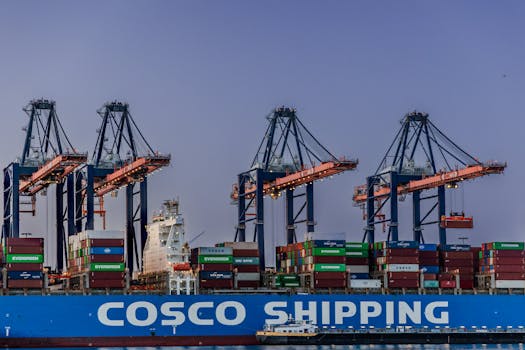

Did you know that a single disruption in a global supply chain can impact millions of consumers and billions in revenue within days? It’s a stark reminder that what happens “behind the scenes” – the intricate dance of getting raw materials to factories, products to warehouses, and finally into the hands of customers – is utterly critical to modern business success. We often take for granted the ease with which we can acquire almost anything, but beneath that convenience lies a complex, interconnected web: the supply chain. Far from being a mere operational function, understanding and mastering your supply chain is arguably one of the most significant strategic advantages a business can possess today.
What Exactly Is a Supply Chain, Anyway?
At its core, a supply chain encompasses every step involved in creating and delivering a product or service. This isn’t just about trucks and ships; it’s a vast ecosystem that includes:
Raw Material Suppliers: The very beginning of the chain, providing the basic components.
Manufacturers: Where raw materials are transformed into finished goods.
Distributors and Wholesalers: Those who move goods in bulk from manufacturers to retailers.
Retailers: The final point of sale for the consumer.
Logistics and Transportation Providers: The backbone, moving goods across various stages.
Information Flow: Crucially, the data and communication that orchestrates all these movements.
It’s a dynamic system where each link’s performance directly affects the others. A hiccup at one point can cause a ripple effect, leading to delays, increased costs, or even outright shortages.
The Hidden Costs of a Weak Supply Chain
Many businesses focus on the end product or customer service, overlooking the profound impact a poorly managed supply chain can have. I’ve seen firsthand how seemingly minor inefficiencies can snowball. For instance, a lack of real-time inventory visibility can lead to:
Excess Inventory: Tying up capital and increasing storage costs.
Stockouts: Resulting in lost sales and frustrated customers.
Expedited Shipping: A costly emergency measure to rectify missed deadlines.
Damaged Supplier Relationships: Due to inconsistent demand forecasts or late payments.
These aren’t just operational headaches; they directly erode profit margins and competitive standing. Investing in supply chain optimization isn’t an expense; it’s a strategic investment in profitability and resilience.
Building a Resilient Supply Chain: Beyond Just “Just-in-Time”
The traditional “just-in-time” (JIT) manufacturing model, while efficient in stable environments, has shown its vulnerabilities. The disruptions of recent years have highlighted the need for a more robust approach. So, what does building resilience look like?
#### Diversifying Your Supplier Base
Relying on a single supplier, especially for critical components, is a significant risk. Exploring multiple sourcing options, even if it means slightly higher initial costs, can provide a crucial safety net. This diversification should extend geographically, too. Having suppliers in different regions can mitigate risks from local disasters, political instability, or trade disputes.
#### Enhancing Visibility and Data Analytics
You can’t manage what you can’t see. Modern supply chains generate vast amounts of data. Leveraging technology for real-time tracking, demand forecasting, and inventory management is paramount. Advanced analytics can help identify potential bottlenecks before they become critical problems, enabling proactive adjustments. This predictive capability is a game-changer for improving your overall supply chain performance.
#### Strengthening Collaboration and Communication
The supply chain is a collaborative effort. Open and honest communication between all stakeholders – from raw material providers to end-users – is vital. Sharing information on demand forecasts, production schedules, and potential disruptions fosters a more agile and responsive network. It’s about building partnerships, not just transactional relationships.
The Role of Technology in Modern Supply Chains
Technology is no longer a nice-to-have; it’s a necessity. Consider these advancements:
AI and Machine Learning: For sophisticated demand forecasting, route optimization, and risk prediction.
Blockchain: To enhance transparency and traceability, ensuring the authenticity and integrity of goods.
Internet of Things (IoT): Sensors on goods and vehicles provide real-time location, condition, and status updates.
Cloud Computing: Enables seamless data sharing and collaboration across geographically dispersed teams.
Adopting these tools can transform a reactive supply chain into a proactive, intelligent, and incredibly efficient operation.
Preparing for the Unexpected: Risk Management is Key
No matter how well-oiled your supply chain is, unforeseen events will occur. The question isn’t if a disruption will happen, but when and how prepared you’ll be. Developing a comprehensive risk management strategy is non-negotiable. This involves:
Identifying Potential Risks: From natural disasters and geopolitical events to cyberattacks and supplier bankruptcies.
Assessing Impact and Likelihood: Prioritizing which risks pose the greatest threat.
Developing Contingency Plans: What steps will you take if a specific risk materializes? This might include alternative suppliers, safety stock levels, or crisis communication protocols.
Regularly Reviewing and Updating Plans: The global landscape is constantly changing, and so should your risk assessments.
It’s also worth noting that robust supply chain risk management can provide a significant competitive edge when competitors are struggling.
Final Thoughts: Proactive Planning for a Dynamic Future
Ultimately, the most successful businesses treat their supply chain not as a cost center, but as a strategic asset. It’s about more than just moving goods; it’s about building resilience, fostering collaboration, and leveraging technology to navigate complexity. My advice? Start by mapping out your entire supply chain, from end to end. Identify your most critical dependencies and potential weak points. Then, prioritize one area for improvement – perhaps enhancing visibility or diversifying suppliers – and tackle it systematically. A single, focused improvement can have a surprisingly powerful domino effect on your overall operational efficiency and bottom line.