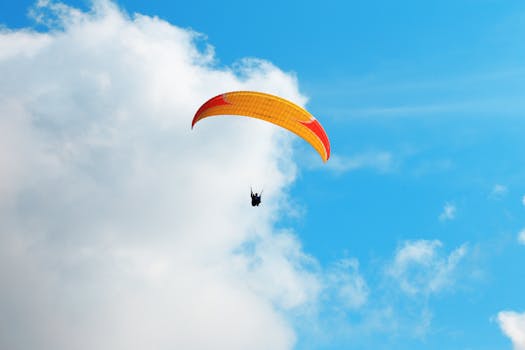

Have you ever stopped to consider the humble parachute? For most, it conjures images of daring skydivers, dramatic emergency ejections, or perhaps even cartoon characters dangling precariously from the sky. It’s a symbol of last resort, a lifesaver in extreme circumstances. But what if I told you the story of the parachute is far richer, more diverse, and frankly, more fascinating than a simple descent device? In my experience, we often relegate such ingenious inventions to a single, albeit critical, function, overlooking their broader impact and surprising adaptability.
This isn’t just about how to deploy a parachute in a crisis; it’s about appreciating the engineering brilliance, the historical context, and the unexpected places this technology has landed.
A Leap of Faith: The Birth of the Parachute
The concept of slowing descent is as old as gravity itself, but the first truly recognizable parachute design is often attributed to none other than Leonardo da Vinci. His 15th-century sketch depicts a pyramidal structure that, in theory, could allow a person to descend safely from a height. While never built in his lifetime, it laid the conceptual groundwork.
Fast forward to the late 18th century, and the brave spirit of aeronautics took hold. Blanchard’s dog, a canine pioneer, made a successful parachute jump from a hot air balloon in 1785, paving the way for human experimentation. These early attempts were fraught with peril, often relying on rudimentary materials and daring leaps of faith. The early days were a testament to human curiosity and a burgeoning desire to conquer the skies, even if it meant facing the abyss with a canopy of cloth.
More Than Just an Emergency Exit: Parachute in Modern Marvels
The most common association with a parachute remains its role in aviation safety. From military personnel jumping from damaged aircraft to skydivers enjoying a recreational thrill, its primary function is indisputably life-saving. However, the principles of drag and controlled descent have found their way into applications far removed from sudden aerial departures.
Consider the world of space exploration. Re-entry vehicles, whether carrying astronauts or unmanned scientific probes, utilize parachutes to significantly reduce their speed before splashdown or landing. Imagine a capsule hurtling through the atmosphere at thousands of miles per hour; without a series of carefully engineered parachutes, the impact would be catastrophic. It’s a high-stakes ballet of physics, where the parachute is a critical, silent partner.
Furthermore, the deployment of parachutes isn’t limited to the final moments of a journey. In some high-performance aircraft, drogue chutes are used to assist with braking after landing, particularly on shorter runways or in wet conditions. This application showcases how the parachute isn’t just about falling, but about controlled deceleration in various phases of movement.
Unforeseen Utility: Parachutes in Unlikely Places
The ingenuity of engineers is remarkable, and they’ve found ways to adapt the parachute principle to solve a surprising array of problems. One fascinating area is in payload delivery and deceleration.
Think about the military. Dropping supplies to remote or inaccessible locations often involves large cargo parachutes. These aren’t flimsy fabric; they are robust, precisely designed to ensure that vital equipment – from food and medicine to vehicles – reaches its destination intact. The sheer scale and engineering involved in these massive parachutes are awe-inspiring.
But it goes even smaller. Have you ever seen footage of Mars rovers or other planetary landers? Many of them have employed parachutes as a crucial part of their descent sequence. The thin Martian atmosphere poses a unique challenge, requiring specialized parachute designs that can deploy and function effectively in such conditions. It’s a testament to how fundamental principles can be adapted to extreme environments.
Another less obvious application is in storm chasing and weather modification research. Specialized research balloons, often released into severe weather systems, might employ small parachutes for controlled descent or to deploy instruments. It’s a way to gather data from the heart of a storm without losing valuable equipment to the tempest.
The Science Behind the Save: How Does it Really Work?
At its core, a parachute works by dramatically increasing the surface area exposed to the air. This generates significant air resistance, or drag, which counteracts the force of gravity. The larger the surface area and the more permeable the fabric (or designed to be), the greater the drag, and the slower the descent.
Several factors are crucial for effective parachute function:
Material Strength and Durability: The fabric must be able to withstand the immense forces of deployment and sustained air resistance without tearing. High-strength nylon and similar synthetic fabrics are commonly used.
Aerodynamic Design: The shape and cut of the parachute are meticulously engineered to ensure stability and prevent oscillation. A well-designed parachute will ‘fly’ stably rather than tumble uncontrollably.
Deployment Mechanism: This is perhaps the most critical element. The parachute must deploy reliably and quickly when needed. This involves sophisticated packing techniques and deployment systems, often utilizing static lines, pilot chutes, or mortar-fired charges.
Ventilation and Airflow: Modern parachutes often incorporate vents or specific fabric porosity to manage airflow, improving stability and control.
The physics involved is a delicate balance between gravity pulling the object down and drag pushing it up. It’s a constant negotiation, and the parachute is the champion negotiator.
Considering the Next Step: Is a Parachute Right for You?
While the immediate thought might be about personal skydiving, the question of whether a parachute is “right for you” can be framed more broadly. For most people, it’s not about making a purchase for personal use, but rather appreciating the technology and the professionals who rely on it.
If you’re considering recreational activities like skydiving or paragliding, then rigorous training and quality equipment are non-negotiable. Reputable schools will guide you through every step, ensuring you understand deployment, emergency procedures, and the maintenance of your gear. It’s an investment in your safety and enjoyment.
For those involved in aviation, whether as pilots or passengers, understanding the role of emergency parachutes (especially in certain types of aircraft) is part of responsible operation. For engineers and designers, the principles of parachute technology continue to inspire innovation in areas like aerodynamics, materials science, and safety systems.
The evolution of the parachute is a remarkable journey from a whimsical sketch to a vital component in everything from space missions to disaster relief. It’s a testament to human ingenuity and our persistent drive to solve problems, whether they involve escaping a burning aircraft or landing a rover on another planet.
Final Thoughts: Embracing the Unseen Hero
The parachute, in its various forms, stands as a quiet hero of innovation. It’s a device that embodies both incredible risk and profound safety, a testament to the power of physics applied with meticulous engineering. Next time you see a parachute, whether in a movie, an airshow, or even a news report about space exploration, take a moment to appreciate the complex science and bold human endeavor that makes it all possible. It’s a reminder that sometimes, the most critical solutions are the ones that allow us to gently touch down after facing the most extreme heights.